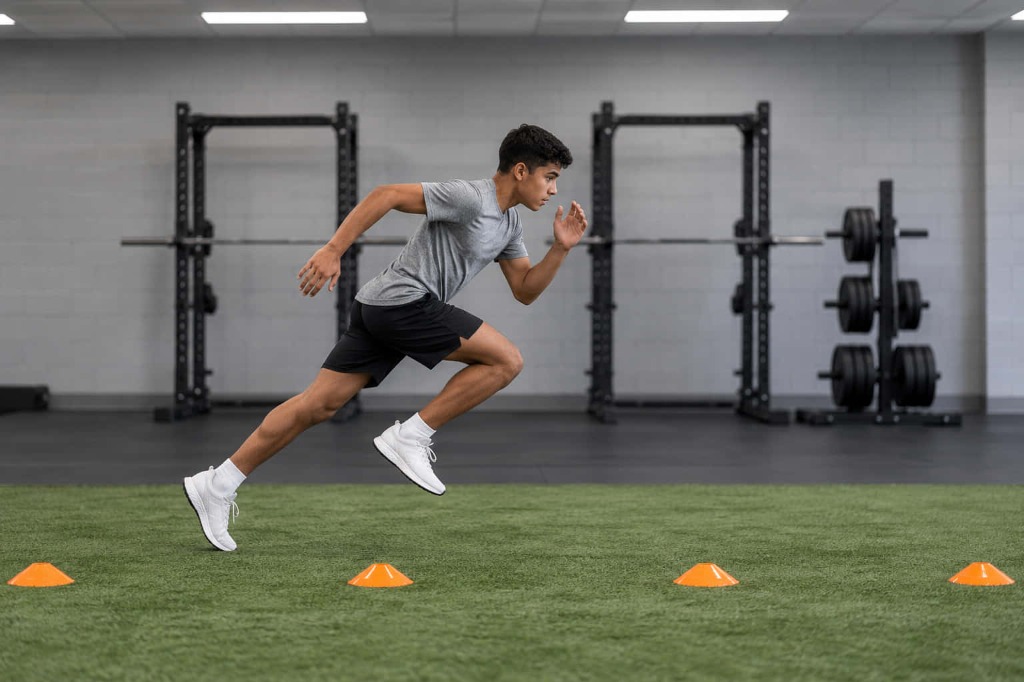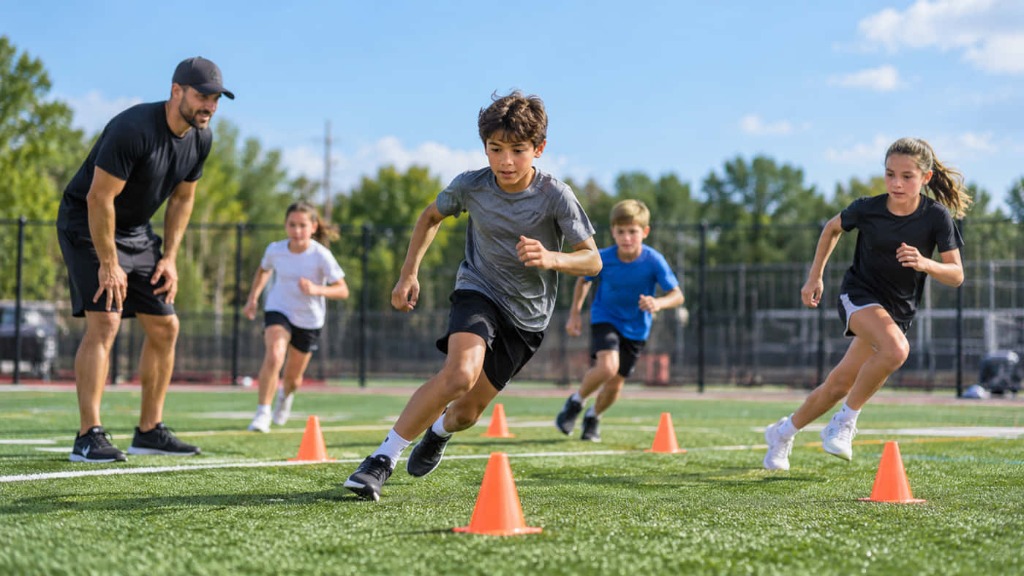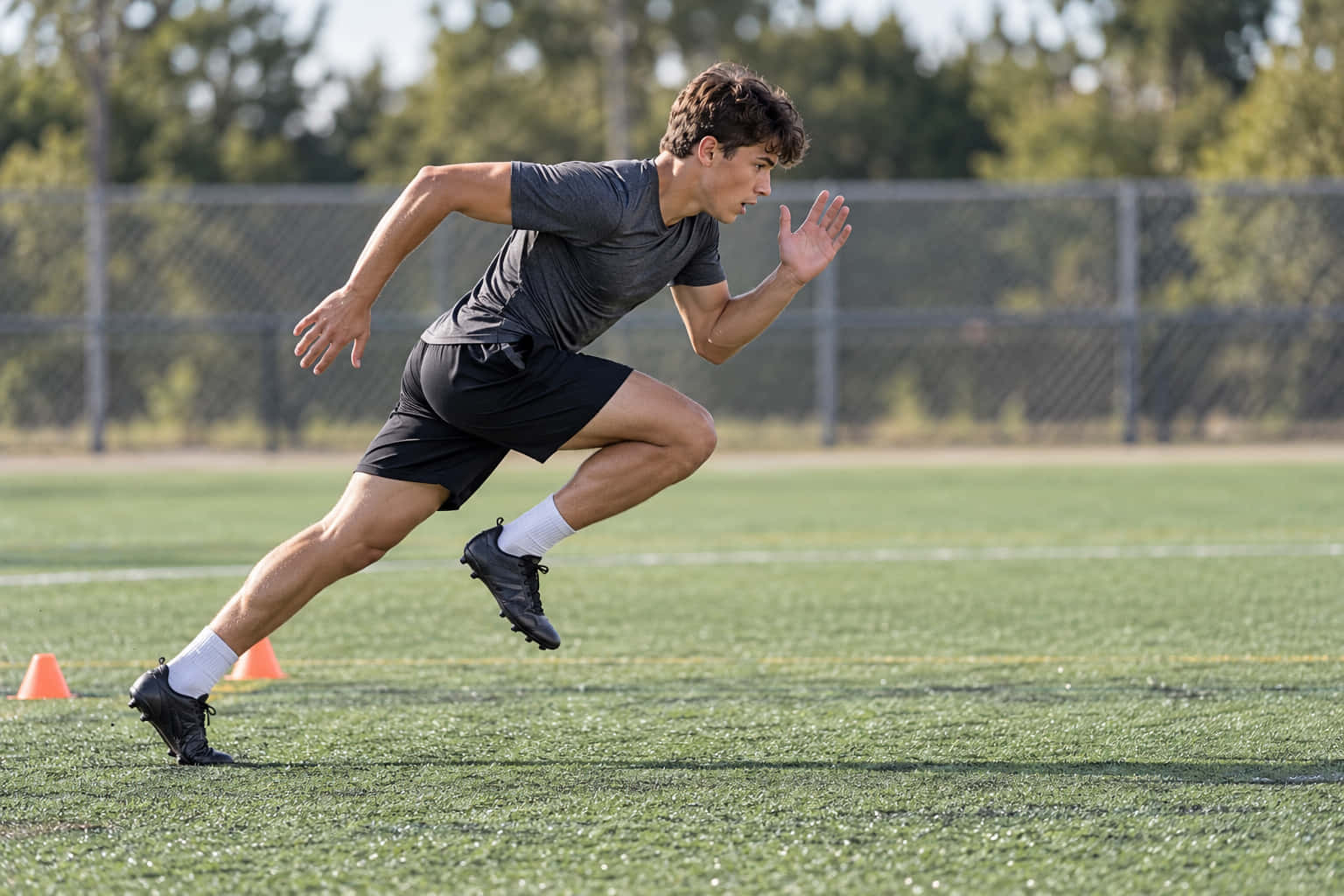
Here is how to improve sprint speed as a young athlete:
- Sprint short distances at full effort with plenty of rest.
- Build a sound start.
- Add age-appropriate strength and power work.
- Test the same way every time.
Speed improves through quality practice, not exhaustion. This guide covers what drives sprint speed, which drills fix which problems, a sample session, and how to tell whether training is working.
What Determines Sprint Speed?
Sprint speed rests on two linked abilities. Acceleration is how quickly an athlete builds speed. Maximum sprint speed is the top speed they reach.
Technique decides where force goes. Strength and power decide how much force is available. Coordination and training experience tie everything together.
Running faster isn’t about reaching for longer strides or moving the legs faster. Research on top-speed running found that faster runners apply greater force to the ground. They don’t move their legs through the air any faster [1]. Speed also changes with growth, so compare young athletes with their own past results, not their teammates.
Acceleration vs. Maximum Sprint Speed
| Sprint stage | Main purpose | General technique focus |
|---|---|---|
| Standing start | Establish a balanced starting position | Stable stance and readiness |
| Acceleration | Build speed from a stationary start | Forward projection and effective pushing |
| Upright sprinting | Maintain or approach top speed | Tall posture, coordinated arm action, and efficient steps |
During acceleration, the athlete starts with a forward lean and rises gradually over several steps. No single body angle or distance marks the switch to upright sprinting. It varies with strength, experience, and the sprint itself.
Running faster for sports means training the sprints your sport actually uses. A basketball player driving past a defender relies heavily on the first few steps. So does a batter running to first base. A soccer winger chasing a long ball, or a receiver on a deep route, may also reach upright sprinting.
How to Improve Sprint Starting Technique
Start from a stable, staggered stance:
- Feet about hip-width apart.
- Weight over the front foot.
- Knees slightly bent.
- The arm opposite the front leg held forward.
On the first steps, push the ground back behind you instead of reaching forward. Drive the arms forward and back, not across the body. Let your body rise gradually rather than popping straight up.
Get comfortable with one starting position before adding reactions, turns, or sport stances. Two useful cues are “Push the ground behind you” and “Let your body rise on its own.” Use one at a time.
Sprint Drills for Young Athletes
These acceleration training and sprint technique drills each solve a specific problem. Not every athlete needs all four.
| Drill | How to do it | Checkpoint | Common mistake |
|---|---|---|---|
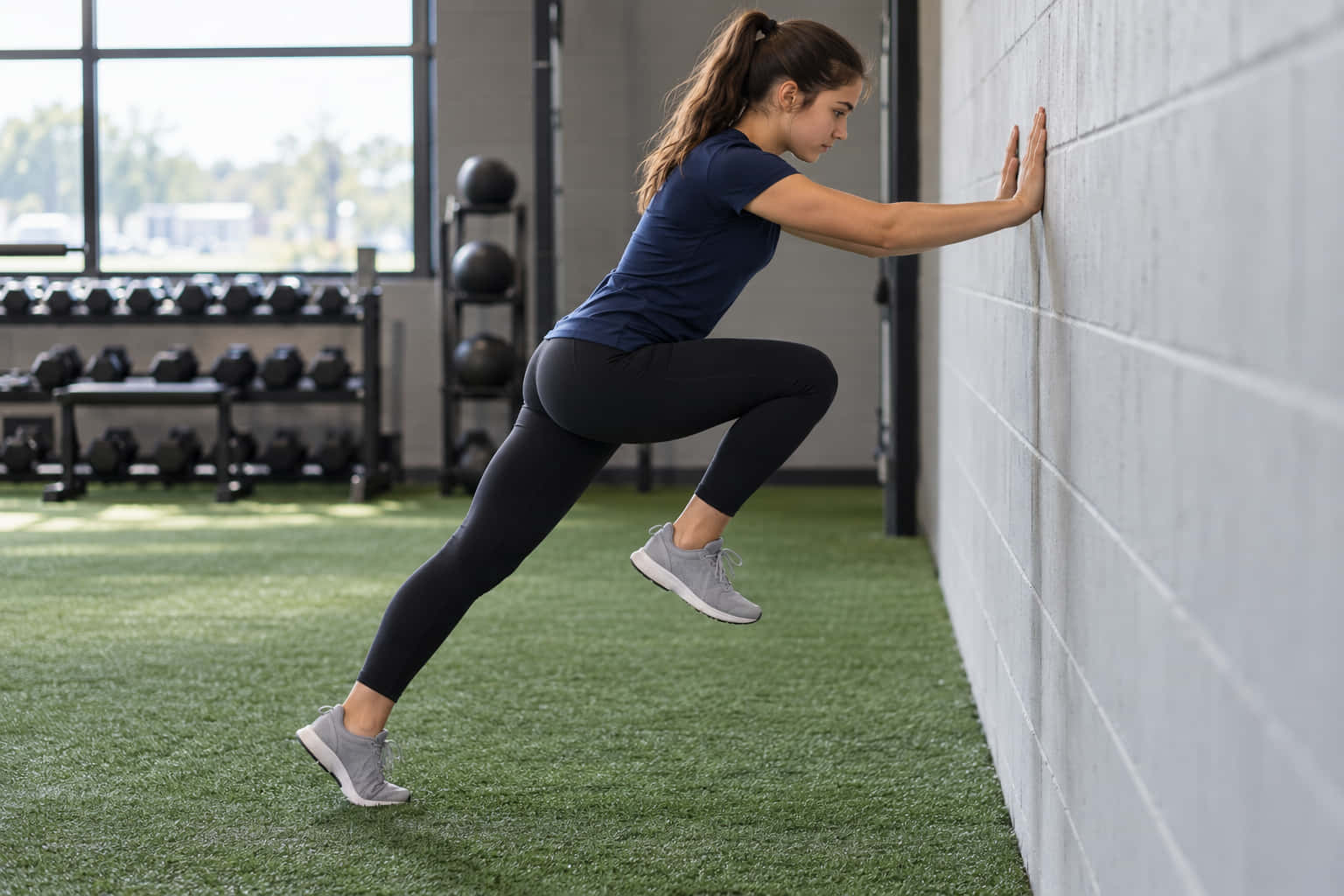
| Wall drill | Lean into a wall with straight arms. Drive one knee up, then switch legs on a call. | Straight line from head to back heel | Bending at the hips |
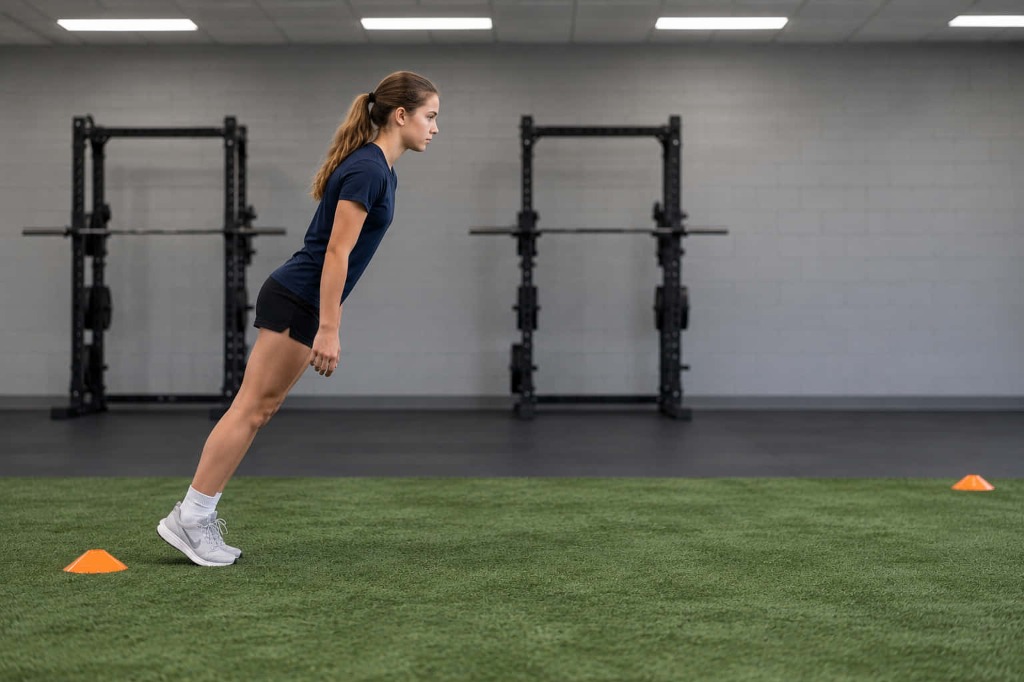
| Falling start | Stand tall and lean from the ankles until you must step. Then sprint 10 yards. | First foot lands under the hips | Bending at the waist instead of leaning |
| A-march / A-skip | March, then skip, lifting the knee and stepping down under the hips. | Tall posture throughout | Leaning back or rushing |
| Split-stance sprint | Sprint 10–20 yards from a staggered stance, then walk back. | Gradual rise over the first steps | Cutting rest short |
How to Choose the Right Drill
These are coaching examples, not guaranteed fixes. Watch a few reps, then pick one focus:
- The athlete reaches forward on the first step: Try a falling start, which encourages the first step to land directly under the body rather than out in front.
- The athlete rises too quickly: Work on controlled acceleration: wall drills first to feel the torso angle, then split-stance sprints with the cue “let your body rise on its own.”
- Technique breaks down as fatigue builds: Reduce the repetitions or extend rest. The problem may be fatigue, not skill.
If a change doesn’t help after a few sessions, a qualified coach can look for other movement causes.
How Strength and Power Training Support Sprinting
Sprint-specific training appears to be the most effective way to improve sprint times, including for young athletes [2][3]. Strength and power training can add to those gains, but lifting alone won’t make an athlete fast [2][3]. Strength raises the force available, and sprint practice teaches the athlete to use it.
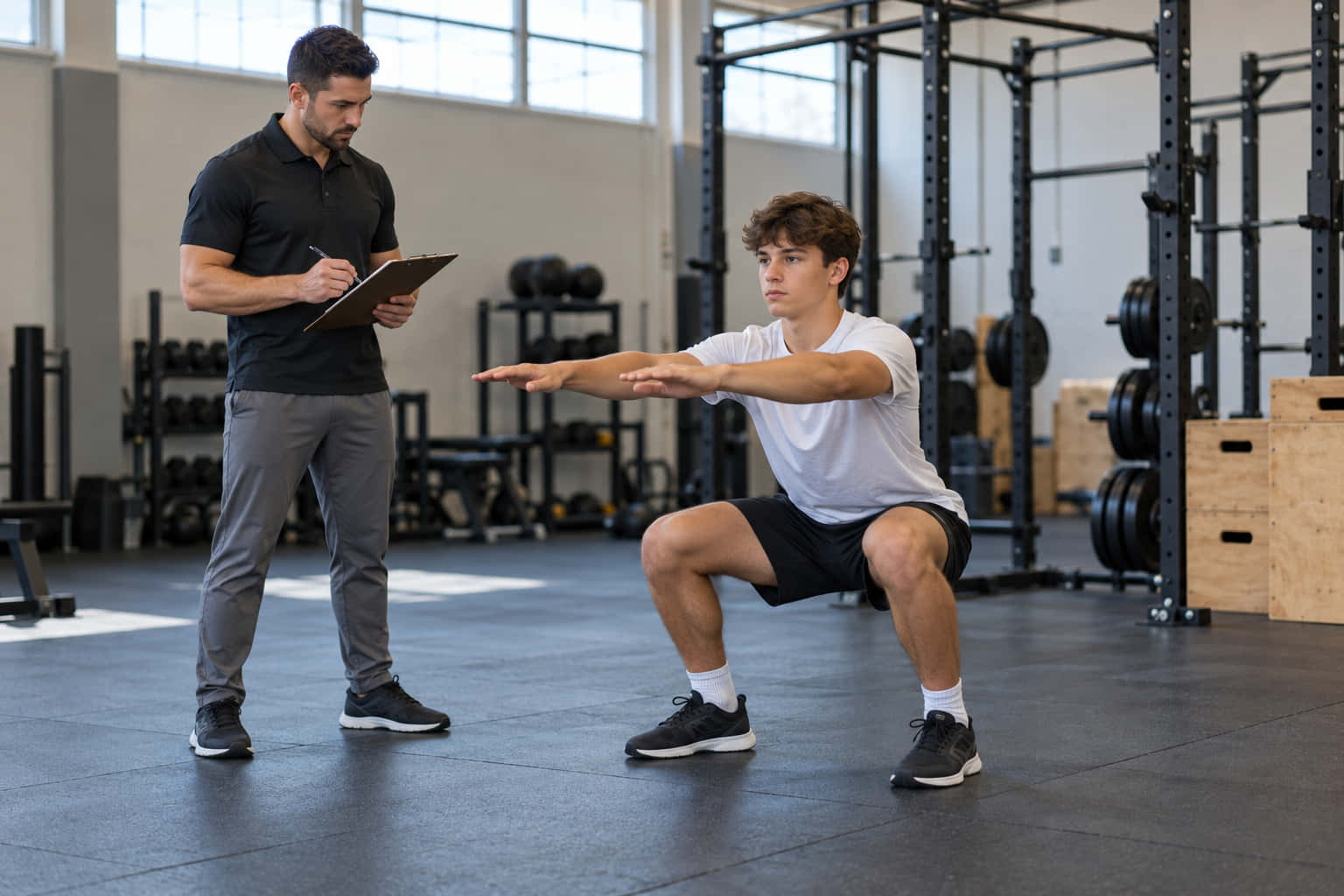
Good starting points include bodyweight squats, lunges, glute bridges, and controlled jumps with soft landings. Major guidance supports youth resistance training when it emphasizes proper technique and is supervised by qualified professionals [4][5]. The right exercises depend on age, maturity, experience, and coaching. Our Strength & Conditioning page explains how Peak selects and progresses exercises.
How Much Rest Do Sprint Repetitions Need?
Sprint training for athletes only builds speed when each rep is close to full effort. Research-based sprint guidance calls for full recovery between sprints, so performance doesn’t drop off [6].
Short rest makes reps slower, which turns a speed session into conditioning. Conditioning has value, but it develops a different physical quality. A practical rule: rest until the athlete feels ready and can match the previous rep.
Sample Sprint Training Session
Illustrative example, not an individualized prescription: an off-season session for a healthy high school athlete with some sprint experience.
| Training Block | Duration / Volume | Drills & Exercises | Recovery Protocol |
|---|---|---|---|
| Warm-up | 10–12 min | Easy jogging, dynamic mobility, A-skips, and three build-up runs at rising effort | Continuous easy pace |
| Technique | 6–8 min | Wall drill, 2 × 5 per leg, then 3 falling starts over 10 yards | Walk back after each sprint |
| Acceleration | 8–10 min | 5 × 15 yards from a split stance | 90 seconds to 2 minutes full rest |
| Longer sprints | 8–10 min | 3 × 30 yards at maximum effort | 2–3 minutes full recovery |
A qualified coach should adjust this session for the athlete’s age, experience, current training load, and readiness that day. Youth development guidance stresses training matched to the individual, with enough rest and recovery [7].
Stop the session if pain develops or running mechanics change noticeably. Younger or newer athletes need fewer reps and shorter distances.
How to Track Sprint Progress
Consistent Distances and Timing Methods
Pick one or two test distances, such as 10 and 20 yards, and keep them fixed. Use the same starting position and start signal every time.
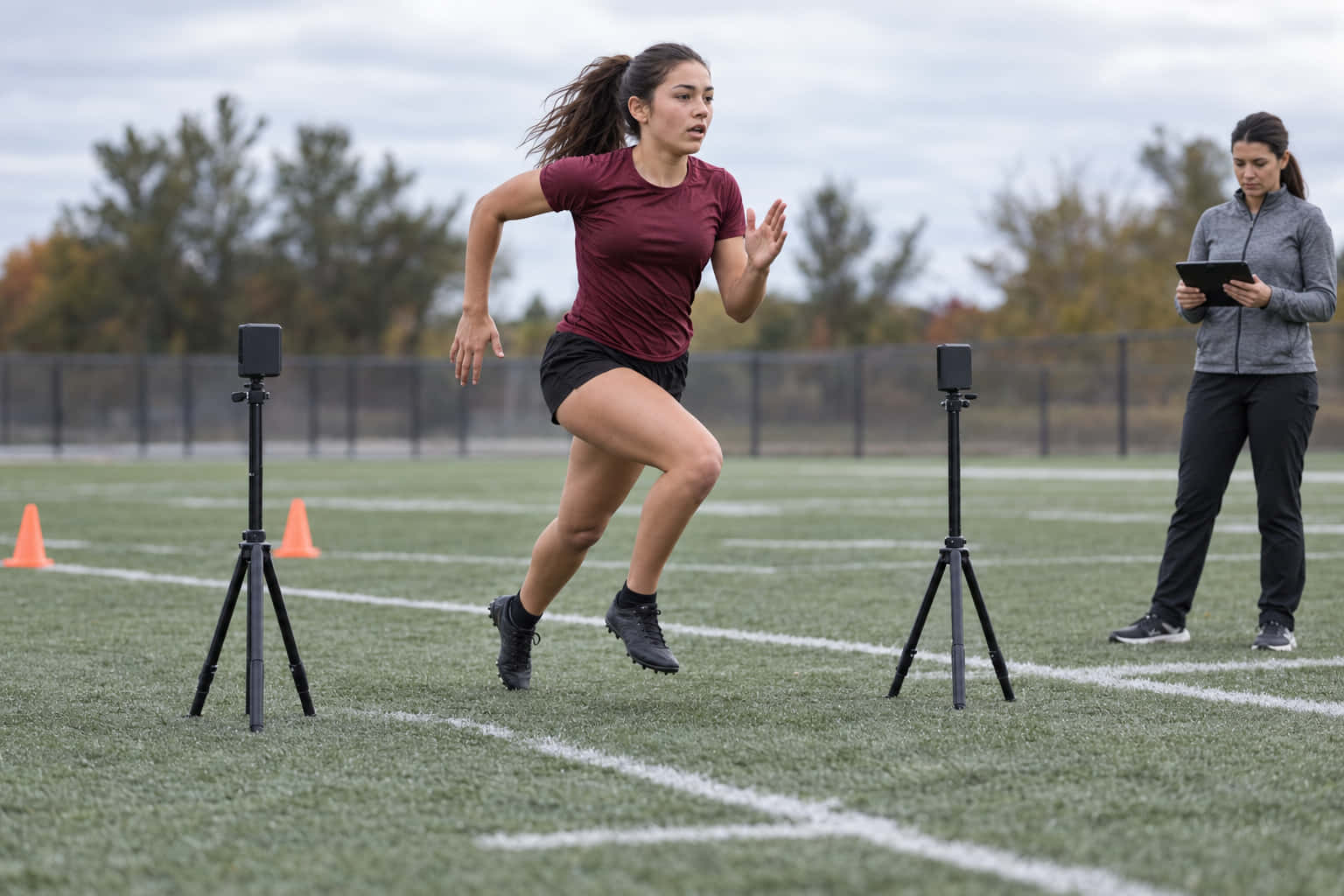
Handheld stopwatch times can differ from electronic timing because the person operating the watch must react to the start and finish. The size of this difference varies by test and timing method [8][9][10]. Over short sprints, the error can be larger than real improvement, which is why one review advises against hand timing over 10–20 meters [8]. Use one timing method for every test, and avoid treating small changes as proven improvement.
Recording Technique and Training Conditions
Log the distance, time, starting position, and timing method. Add the surface, footwear, and outdoor conditions such as wind and temperature. Include one technique note, such as “rose too early.”
Compare repeated tests under similar conditions. One attempt proves little, but a trend across several test days tells you more.
Common Sprint Training Mistakes
- Sprinting while fatigued: Schedule sprints right after the warm-up, not at the end of practice when fatigue alters biomechanics.
- Too little rest: If times fade, rest longer or end the set. Speed requires full ATP-PC recovery.
- Reaching forward for longer strides: This creates excessive braking force. Cue pushing the ground backward instead.
- Too many cues at once: Give one focus per set so the athlete can internalize the motor pattern.
- Adding volume too quickly: Count the sprinting in team practices and games, and increase training volume gradually. Stop for sharp or lingering pain and have it assessed.
When to Work With a Sports Performance Coach
A qualified coach can help when technique problems persist or when an athlete needs a plan built around their sport and season. A coach can also help when you’re unsure how to improve sprint speed during a busy season.
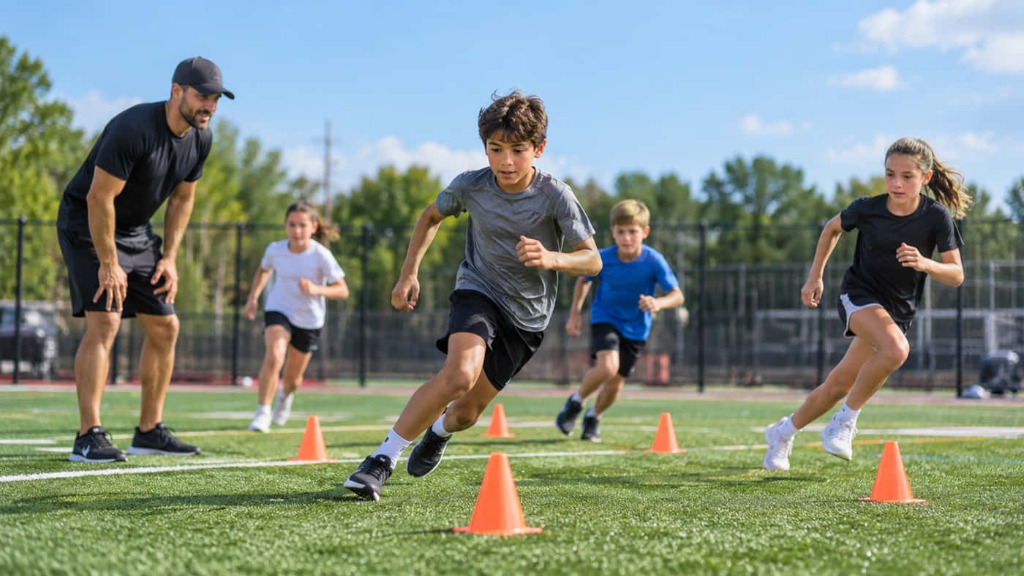
How Peak approaches it: At Peak Fitness Academy, Coach Greg starts by learning the athlete’s sport, schedule, training history, and goals. Before moving to faster or more complex drills, he watches how the athlete moves through unloaded patterns, looking at posture, hip mobility, and landing control. Drills are chosen to fit the athlete’s sport and movement maturity. If fatigue or compensation shows up, the exercise is scaled back instead of pushed through.
Peak’s Speed & Agility Training focuses on acceleration and sprint mechanics. 1-on-1 athlete training offers individual coaching. Strength and conditioning coaching supports the force side of speed.
Frequently Asked Questions
How can young athletes improve sprint speed?
Practice short, full-effort sprints with full rest, build a sound start, and add strength gradually.
What drills help improve acceleration?
Wall drills, falling starts, and split-stance sprints are common choices. Match the drill to the problem you see.
Does strength training help athletes sprint faster?
It can support sprint gains, especially alongside sprint practice. It doesn't replace sprinting.
How often should young athletes practice sprinting?
There's no single right number. It depends on age, season, and how much sprinting team practice already includes.
How can athletes measure sprint speed accurately?
Use the same distance, start, surface, and timing method every time. Electronic timing is more precise than a stopwatch.
Conclusion: Train Speed Like a Skill
Figuring out how to improve sprint speed comes down to a few principles. Sprint short distances at full effort, and rest enough to keep reps fast. Build a sound start, and add strength suited to the athlete. Measure progress the same way every time, and judge improvement over weeks, not single sessions.
Training in the Mooresville area? Ask Peak Fitness Academy about coached speed and agility sessions.
References & Scientific Sources
- Weyand PG, Sternlight DB, Bellizzi MJ, Wright S. Faster top running speeds are achieved with greater ground forces not more rapid leg movements. Journal of Applied Physiology. 2000;89(5):1991–1999.
- Rumpf MC, Lockie RG, Cronin JB, Jalilvand F. Effect of different sprint training methods on sprint performance over various distances: a brief review. Journal of Strength and Conditioning Research. 2016;30(6). NSCA
- Speed development in young athletes. In: Lloyd RS, Oliver JL, eds. Strength and Conditioning for Young Athletes: Science and Application. 3rd ed. Taylor & Francis; 2026:172–188. Cardiff Met
- Lloyd RS, Faigenbaum AD, Stone MH, et al. Position statement on youth resistance training: the 2014 International Consensus. British Journal of Sports Medicine. 2014;48(7):498–505. DOI
- Stricker PR, Faigenbaum AD, McCambridge TM; Council on Sports Medicine and Fitness. Resistance training for children and adolescents. Pediatrics. 2020;145(6). AAP Summary
- Haugen T, Seiler S, Sandbakk Ø, Tønnessen E. The training and development of elite sprint performance: an integration of scientific and best practice literature. Sports Medicine – Open. 2019;5:44. DOI
- Bergeron MF, Mountjoy M, Armstrong N, et al. International Olympic Committee consensus statement on youth athletic development. British Journal of Sports Medicine. 2015;49(13):843–851. DOI
- Haugen T, Buchheit M. Sprint running performance monitoring: methodological and practical considerations. Sports Medicine. 2016;46(5):641–656. DOI
- Hetzler RK, Stickley CD, Lundquist KM, Kimura IF. Reliability and accuracy of handheld stopwatches compared with electronic timing in measuring sprint performance. Journal of Strength and Conditioning Research. 2008;22(6):1969–1976. DOI
- Zaj±c B, Gaj P, Zięba J. Concurrent validity and inter-rater reliability of hand-held measurements of maximal sprint speed. Journal of Kinesiology and Exercise Sciences. 2022;32(100):15–21. DOI