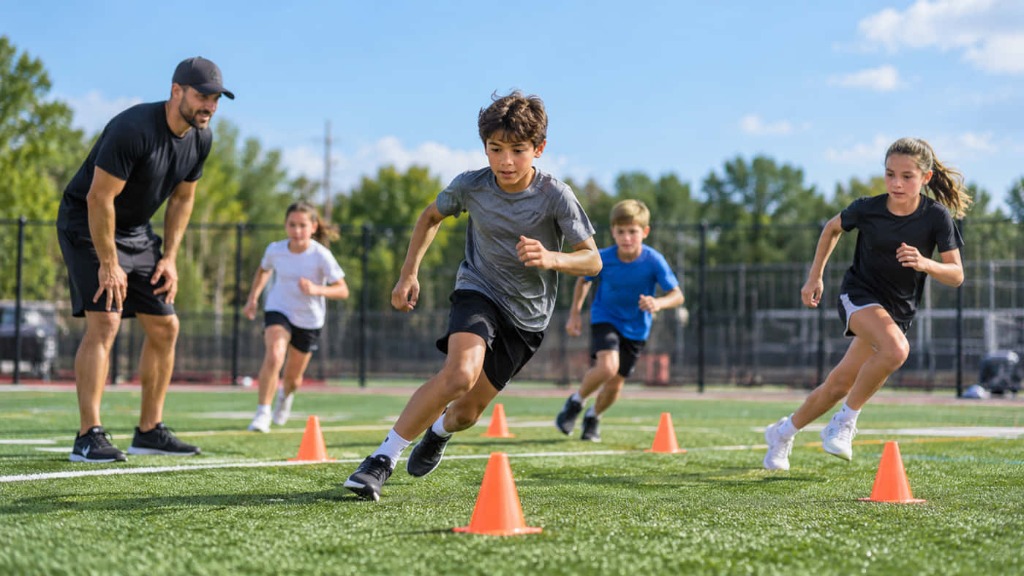
At What Age Can Kids Start Speed and Agility Training?
Kids already practice speed and agility every day. They chase friends at recess, dodge in tag, and jump over puddles. Structured training adds coaching, repetition, and a clear progression to those natural movement skills.
Many youth programs introduce structured sessions during the elementary school years. Early sessions should look like organized games, not intense workouts. Peak Fitness Academy introduces structured youth development through its Athlete Prep/DEVO program, assessing each young athlete individually based on movement coordination, listening ability, and developmental readiness rather than an arbitrary age cutoff.
Age gives only a rough guide. Three factors shape what a child can handle: readiness, supervision, and task complexity. A hopping game for a first grader has low complexity and needs little equipment. A reactive cutting drill at full speed has higher complexity and needs close supervision. A good coach matches each task to the child. So the better question is not “How old?” but “What kind of training suits my child right now?”
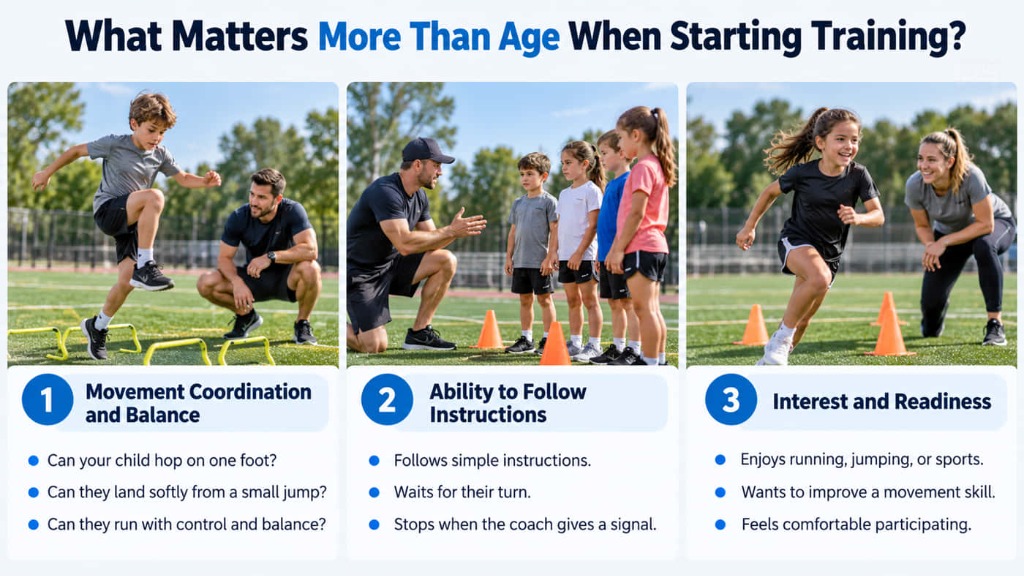
What Matters More Than Age When Starting Training?
Movement Coordination and Balance
Watch how your child moves. Can they hop on one foot, land softly from a small jump, and run without tripping? Coordination develops at different rates, even among kids the same age. Growth spurts can affect balance and coordination for a while. A teenager who grows several inches in a short period may need time to adjust. Coaches should recognize these changes and adjust the drills accordingly.
Ability to Follow Instructions
Speed and agility drills involve fast movement near other kids and equipment. A child needs to follow a two-step instruction, wait for a turn, and stop when the coach calls it. Safety depends on those habits. If your child struggles here, group games and simple coached play can build these skills before more structured sessions begin.
Interest and Readiness
A child who asks to train may engage more readily than one who feels pressured to attend. Pressure from adults can drain the fun out of movement. Ask your child what they want to improve. An answer like “I want to run faster in soccer” gives you a clear starting point. A shrug may suggest that more play is a better starting point.
How Training Should Change as Kids Grow
Elementary School Athletes
Training at this age should feel like play. Coaches use tag variations, hopping patterns, skipping, balance games, and short races. Sessions should stay brief and varied. Kids should have time to rest between efforts. Coaches should focus on movement quality and enjoyment rather than heavy sprint volume or ranking children by time.
Middle School Athletes
Middle schoolers can handle more structure when they are ready. Coaches introduce technique, including body lean during acceleration, arm swing, soft landings, and controlled stops. Growth spurts can affect coordination, so coaches watch for changes and lower the difficulty when needed. Simple bodyweight strength exercises may also become part of training.
High School Athletes
High schoolers can train with greater intensity and longer recovery periods between sprints. Programs may add resisted starts, faster change-of-direction work, and strength training. Training experience matters more than grade level. A ninth grader who has never trained should start with fundamentals, just like a younger athlete.
Developmental Comparison: How Training Evolves
| Age group | Typical emphasis | Session feel | What coaches watch |
|---|---|---|---|
| Elementary school | Running, hopping, balance, and play-based games | Short, varied, and fun | Focus, balance, and enjoyment |
| Middle school | Technique for starting, stopping, and landing | Structured, but still varied | Coordination during growth spurts |
| High school | Acceleration, change of direction, and strength support | Focused, with planned rest | Technique, fatigue, and total workload |
This table is a general guide, not a set of rigid rules. Athletic readiness varies from child to child.
What Does a Beginner Speed and Agility Session Include?
This example shows one possible first-session structure. It runs about 45 minutes, but younger beginners may need shorter sessions or more frequent breaks. It illustrates how coaching focuses on safe mechanics and progression:
- Warm-up (8 to 10 minutes): Easy jogging, skipping, leg swings, and age-appropriate bodyweight movements. The coach watches posture and coordination.
- Movement skills (12 to 15 minutes): Balance holds, small hops with soft landings, backpedaling, and side shuffles. The coach corrects one cue at a time.
- Speed and agility play (15 minutes): Short runs over approximately 10 yards with a walk back to the start, a simple cone weave, and a game such as red light, green light. The coach adjusts distances and difficulty to the child's ability.
- Cool-down (5 minutes): Easy walking, comfortable stretching, and a quick talk about what went well.
Rest between efforts depends on the child's age, fitness, and fatigue. A walk back to the start can provide recovery, but the coach should allow additional rest when needed. Children should stop if they feel unwell or experience pain.
Signs Your Child May Be Ready for Structured Training
Before enrolling in a coaching program, look for these practical indicators in everyday play and team activities:
- Your child follows a two-step instruction without needing a repeat.
- Your child can attempt a one-foot hop and practice landing with control.
- Your child can participate in a group activity suited to their attention span.
- Your child shows interest in running, jumping, or playing a sport.
- Your child tells an adult when something hurts or feels wrong.
- Your child can recover from mistakes with appropriate encouragement.
Not every box needs a check. These signs are helpful starting points, not formal entry requirements. A coach can help identify suitable activities for children who are still developing these skills.
Common Mistakes Parents Should Avoid
- Chasing times: Speed changes with growth, mood, sleep, and training experience. A stopwatch tells you little about an eight-year-old's overall development.
- Stacking sessions on top of full practice schedules: Kids need adequate recovery to manage their total activity and enjoy their sport.
- Comparing your child with teammates: Kids develop on different timelines, and early advantages do not always last.
- Treating speed drills as the only training: Kids benefit from varied movements, free play, and different sports.
- Ignoring pain: Stop the activity if your child reports sharp or unusual pain. Persistent or worsening pain warrants medical assessment. Seek prompt care for severe symptoms.
- Choosing a program based on promises: No coach can guarantee a faster child. Look for sound coaching, appropriate progressions, and realistic goals.
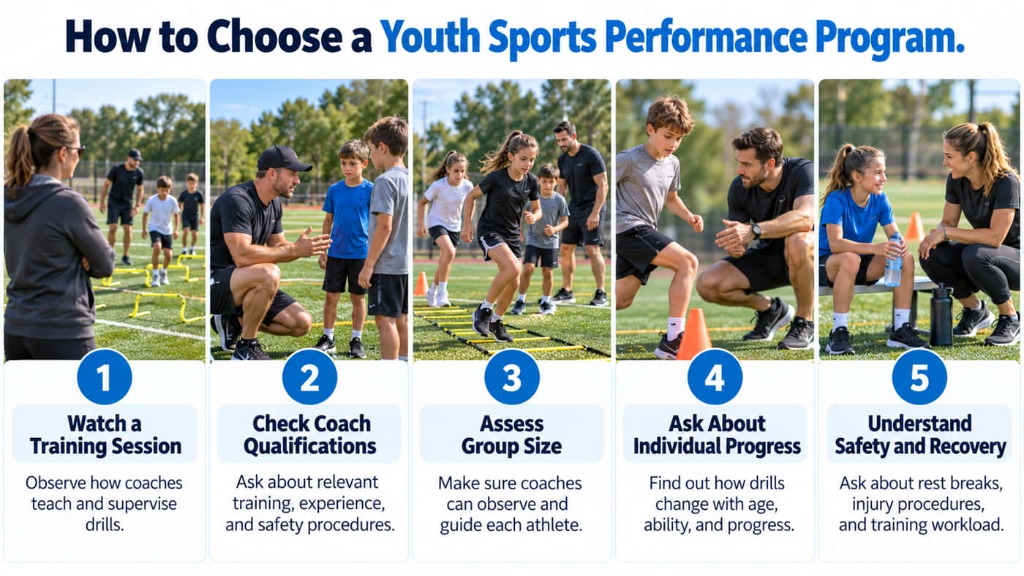
How to Choose a Youth Sports Performance Program
Watch a session before you enroll. Look for coaches who correct technique calmly. Check that group sizes allow coaches to observe every athlete. Notice whether the drills fit the age and ability of the group.
Ask how the coach adjusts a drill for a child who struggles. Ask what happens when a child gets hurt. Ask how the program measures progress beyond sprint times.
Parents considering training in Mooresville, North Carolina, can review Peak Fitness Academy's actual youth training options and speak with a coach about their child's needs. The Youth Training page explains the available youth programs. The Speed & Agility Training page describes the movement skills taught, while the Sports Performance Training page explains how these skills support athletic development.
Frequently Asked Questions
Is Six Too Young for Speed and Agility Training?
Not necessarily. Six-year-olds can practice running, hopping, balance, and simple reaction games under suitable supervision. Sessions should focus on enjoyment and basic movement skills rather than intense conditioning or timed performance tests. The right starting point depends on the child's readiness and the coach's approach.
Does My Child Need to Play a Sport First?
No. Many kids start training to build general coordination. Playing a sport provides additional practice with game-related movements, but it is not a requirement for basic movement training.
Is Speed and Agility Training Safe for Kids?
Appropriate supervision, age-appropriate drills, and adequate recovery help manage the risks. However, all physical activity carries some risk. Stop a session if a child reports pain or feels unwell. Seek medical advice for persistent or worsening pain.
Will Training Make My Child Faster?
Training can improve movement skills and may improve speed over time. Results vary by child, training experience, and physical development. Growth also affects performance, and no coach can promise a specific result.
How Often Should My Child Train?
That depends on team practices, school demands, other activities, and recovery. Talk with the coach about the child's total weekly workload, not just the number of training sessions.
Help Your Child Find the Right Starting Point
Not sure whether your child is ready for structured speed and agility training? Contact Peak Fitness Academy to discuss their age, sport, experience, and goals. Coach Greg can help you identify an appropriate starting point and explain the available training options for your young athlete.